CSP Regression Testing: Why Your Security Policy Breaks Every Deploy
By The bee2.io Engineering Team at bee2.io LLC
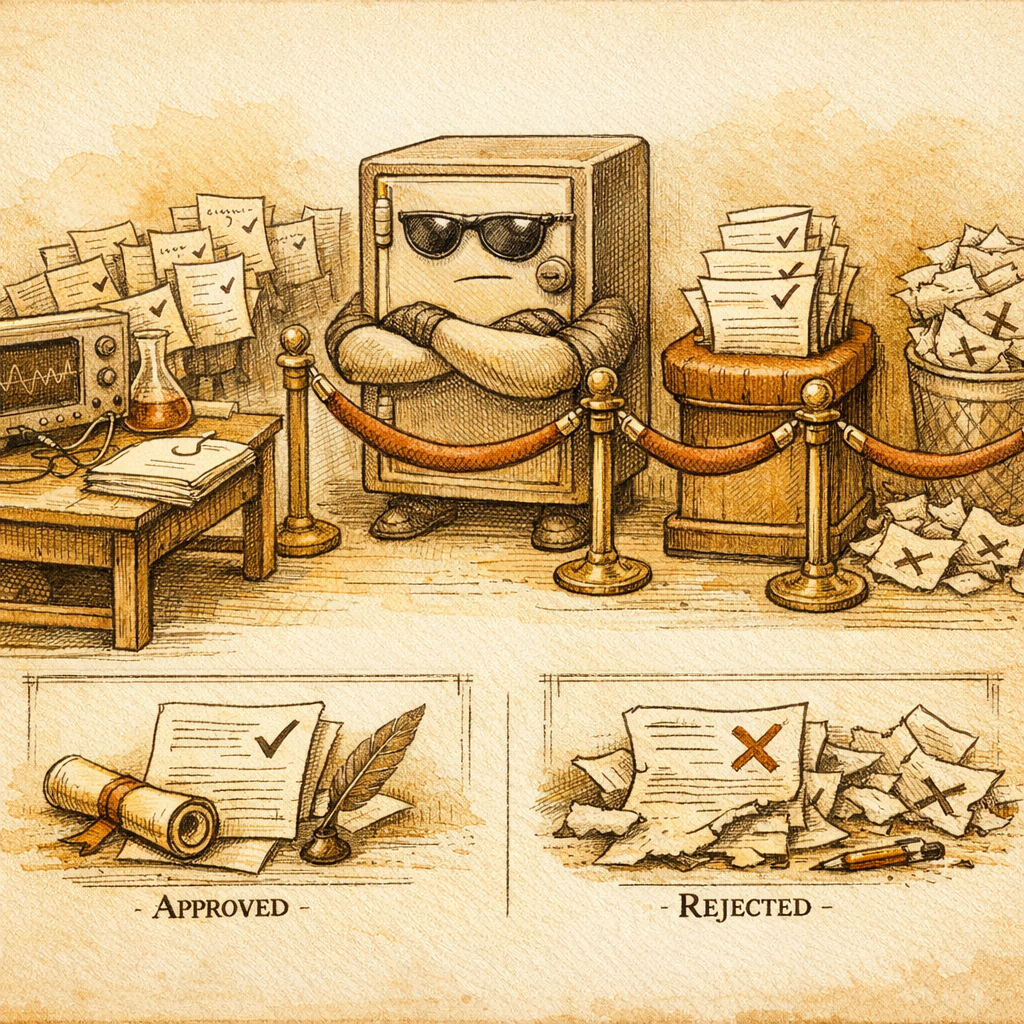
You know that feeling when you deploy what you think is a tiny CSS fix and suddenly your entire analytics system stops working? Your CSP just threw a party without inviting half your scripts. Welcome to the beautiful chaos of Content Security Policy maintenance - where one misplaced whitelisting directive can turn your website into a digital ghost town.
Here's the thing nobody tells you: having a solid Content Security Policy is like having a really paranoid bouncer at your website's front door. But that bouncer has a clipboard, and if your own trusted vendors aren't on it, they're getting the boot. The XSS prevention is genuinely excellent. The problem? Every time you deploy, you're potentially restructuring who's on that list, and you won't know until users start complaining that their experience is borked.
The CSP Regression Test You Forgot to Write
Let's be honest - most teams implement a Content Security Policy, pat themselves on the back for shipping it, and then immediately stop thinking about it. Then someone on the product team wants to add Google Tag Manager. Then the design system needs a custom font. Then a third-party payment processor updates their integration. Suddenly, you're playing CSP whack-a-mole at 3 AM on a Tuesday.
According to published research, approximately 40% of CSP violations in production go undetected for days or weeks because teams don't have systematic testing in place. That's not a security issue - that's a regression issue. Your policy itself isn't broken, but your deployment process didn't verify that the policy still lets the right stuff through.
The solution is embarrassingly straightforward: treat CSP directives like any other code that might break. Build automated regression tests that verify your whitelisting is still working post-deployment.
The Automated Check: CSP Header Validation
Start here. Write a test that hits your site and verifies the Content Security Policy header is actually present and hasn't been mysteriously deleted. Then add assertions for the critical directives you care about:
- Does script-src still include your analytics provider?
- Does style-src have the fonts you need?
- Is connect-src allowing your API domains?
- Did someone accidentally set default-src to 'none' again? (Yes, they did.)
Run this test in your CI/CD pipeline on every single deployment. It takes 90 seconds to write and saves you from shipping CSP violations that break functionality. It's the web development equivalent of checking that you're wearing pants before leaving the house - basic but wildly important.
The Manual Regression Gauntlet: Testing User Journeys
Automated checks catch syntax errors and missing directives. But they won't catch the insidious stuff - when your policy is technically correct but blocks something users actually need. Enter manual regression testing, where you actually interact with your site like a human being (shocking, I know).
After each deployment, run through your critical user flows with the browser console open. Navigate to a product page. Add something to your cart. Try to checkout. Watch for CSP violations in the console - they'll show up as angry red warnings. If you see any that weren't there before, congratulations! You just caught a regression before a customer did.
Create a checklist for your team that includes these specific scenarios:
- Load the homepage - do all tracking pixels fire?
- Click any forms - does your form validation library work?
- Play a video if you have one - is the player whitelisted?
- Open developer tools console - is it clean or full of CSP complaints?
- Check any third-party integrations you added in the last sprint
The key insight here: CSP regression testing isn't actually about security - it's about functionality. You're verifying that your security policy doesn't inadvertently break the feature set you shipped. This is exactly the same principle as regression testing for any other system change.
The Regression Test Template You Can Steal Right Now
Here's the bare-minimum automated regression test that will catch 80% of CSP problems:
Document your required script sources, API domains, and font CDNs. Before deployment, verify the CSP header contains all of them. If something's missing, fail the test. Post-deployment, hit your critical user journeys and check for CSP violation errors in the console. If new violations appear, you have a regression.
That's it. That's the test. You don't need anything fancy. You need it to run every time you deploy. You need it to fail loud and obvious when directives disappear. You need it to catch when someone forgets to whitelist a legitimate resource.
Actually Caring Enough to Check
The real issue isn't that Content Security Policy is hard to test. It's that most teams view it as a one-time security checkbox instead of an ongoing maintenance responsibility. A solid CSP prevents XSS attacks beautifully - but only if it actually stays functional and doesn't regress with every deployment.
Pull up your site right now. Open the network tab. Look at your CSP header. Ask yourself: could I list the exact domains in my script-src directive without looking? Could your team deploy tomorrow and confidently know they didn't break it? If the answer is no to either of those, you need regression tests.
The good news? By the time you finish reading this, you could have a basic automated CSP regression test running in your CI pipeline. It's not glamorous. It's not exciting. It's exactly the kind of boring, reliable testing that prevents 3 AM support tickets about broken checkout flows.
Disclaimer: This article is for informational purposes only and does not constitute legal, professional, or compliance advice. SCOUTb2 is an automated scanning tool that helps identify common issues but does not guarantee full compliance with any standard or regulation.
Stop finding issues manually
SCOUTb2 scans your entire site for accessibility, performance, and SEO problems automatically.