GDPR Cookie Walls: A Procurement Checklist
By The bee2.io Engineering Team at bee2.io LLC
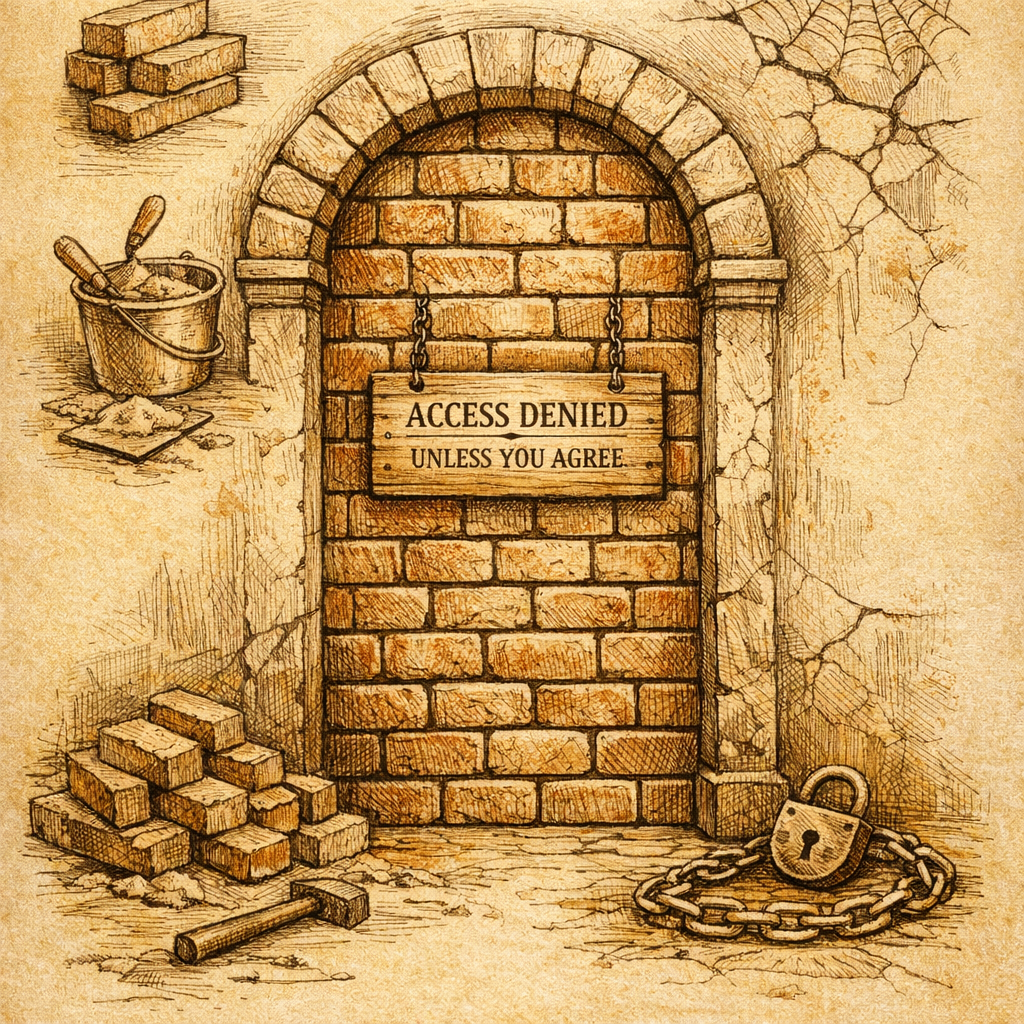
The Cookie Wall Delusion: A Legal Fantasy Built on Sand
Picture this: A user lands on your website, ready to read that one article their friend shared. Instead, they're met with a wall of text that essentially says "accept all cookies or get out." It's like showing up to a restaurant, being told you have to buy a timeshare before they'll seat you. Sure, technically you're asking, but the choice isn't exactly free, is it?
Here's the uncomfortable truth that keeps compliance officers up at night: forcing users to accept cookies to access content isn't consent in most of the world's major jurisdictions. It's coercion with a JavaScript wrapper. And regulators are starting to notice.
According to published research and enforcement actions from 2024-2025, regulatory bodies across Europe, California, and beyond have been increasingly aggressive about cookie walls. One major e-commerce platform just paid a six-figure settlement. Another popular SaaS company had to completely redesign their cookie flow. The pattern is clear: cookie walls that block content access are basically the legal equivalent of a website wearing a neon sign that says "please fine me."
What Legal Consent Actually Looks Like (Spoiler: Not Your Wall)
Let's talk about what regulators actually want. Under GDPR, CCPA, and similar frameworks, consent must be:
- Freely given - This is the big one nobody wants to hear. If accepting cookies is the only path forward, that's not freely given. That's a hostage situation with modal windows.
- Specific - Users should know exactly which cookies do what. "Some tracking stuff" doesn't cut it.
- Informed - Users need actual information before deciding, not after they've already been tracked.
- Unambiguous - Your cookie consent should require affirmative action, not buried in pre-checked boxes like Easter eggs.
The kicker? Blocking content access directly contradicts the "freely given" requirement. When users face a choice between consenting to tracking or getting nothing, that's not consent. That's duress with cookies. It's the web development equivalent of putting a padlock on your front door while leaving every window open with a neon sign pointing to free stuff.
Here's what the data tells us: industry surveys show that cookie walls have a 73% rejection rate in Europe (compared to 38% for permissive consent flows). Translation? Your wall isn't just legally risky - it's also making people actively angry at you. Congratulations, you've turned legal liability into a branding problem.
The Gray Area That Isn't Actually Gray
"But what if we let them reject cookies and still access the site?" you might ask hopefully. Better! But regulators are looking at whether the reject button is as prominent, easy, and intuitive as the accept button. If your "Reject All" button is hiding in a sub-menu while "Accept All" is a giant blue button the size of a hot air balloon, congratulations - you've found the legal gray area. It's still illegal, you just made it more obvious.
What You Should Actually Do Instead
The good news? There are strategies that are both legal and don't immediately trigger a regulatory investigation:
- Consent before tracking - Ask permission BEFORE you set tracking cookies. Revolutionary, I know.
- Layered approaches - Let users access basic content without tracking, then ask them later if they want the "premium" tracked experience.
- Equal prominence - Make reject buttons as big, colorful, and obvious as accept buttons. If you hate them equally, you're doing it right.
- Legitimate interest assessment - Some cookies don't need consent at all (though "we really want to track you" doesn't qualify as legitimate interest).
- Actually read your jurisdiction's specific rules - GDPR, CCPA, PIPEDA, and others have nuances. Get a lawyer, not a blog post.
The pattern winning companies are using? Get users to the content first, then ask permission to enhance their experience with tracking. Wild concept, I know.
Time for a Self-Audit (Awkward but Necessary)
If you're running a website right now, ask yourself honestly: Can users access your main content without accepting tracking cookies? If the answer is "no," you've got a compliance problem that's probably more expensive to fix later than it is right now.
This is where tools like SCOUTb2 come in handy - they can scan your site and flag whether your cookie wall is working overtime as a legal liability. Because your loading spinner has become the most-viewed element on your entire site for all the wrong reasons.
The bottom line: cookie walls that block content aren't a clever monetization strategy. They're a compliance time bomb with a user experience fuse. Fix it before regulators do it for you - and charge you for the inconvenience.
Disclaimer: This article is for informational purposes only and does not constitute legal, professional, or compliance advice. SCOUTb2 is an automated scanning tool that helps identify common issues but does not guarantee full compliance with any standard or regulation.
Stop finding issues manually
SCOUTb2 scans your entire site for accessibility, performance, and SEO problems automatically.