GDPR Cookie Walls: The Legal Nightmare You're Currently Living In
By The bee2.io Engineering Team at bee2.io LLC
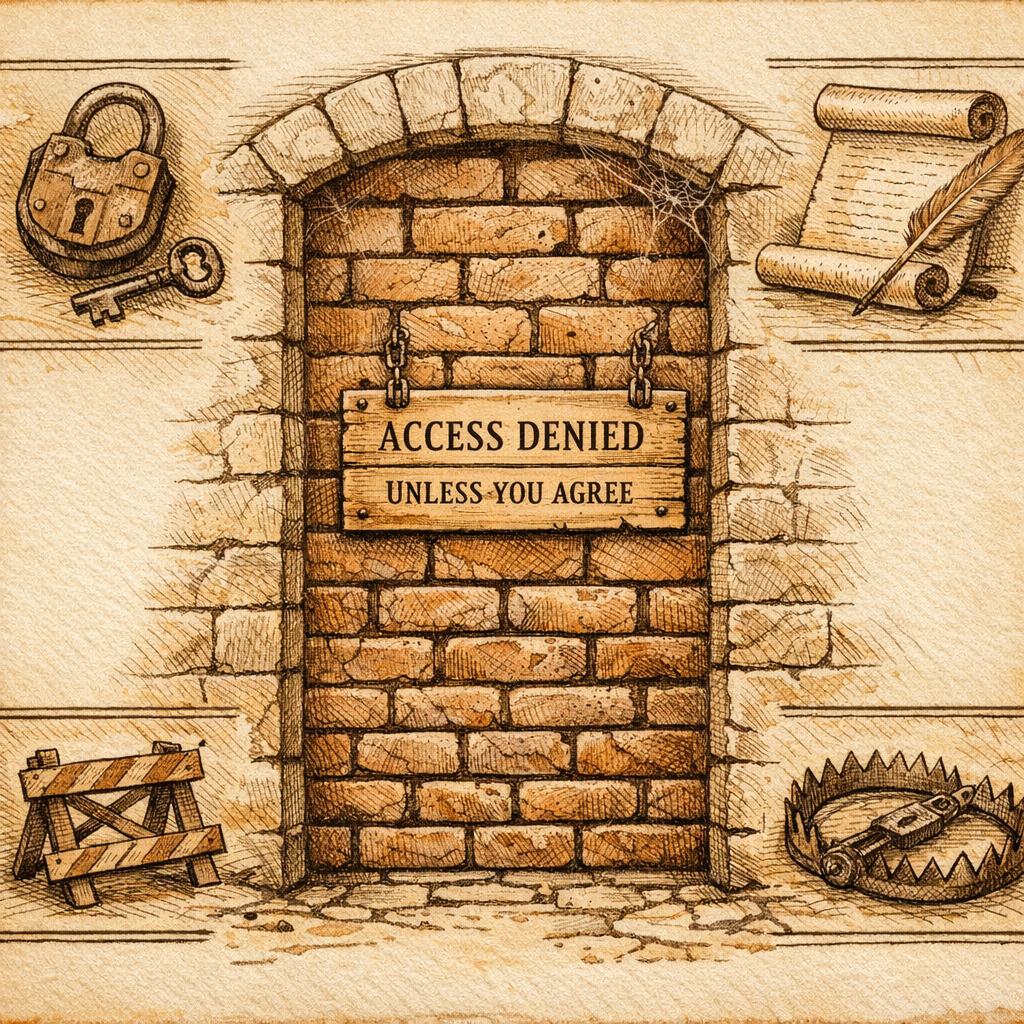
You know that moment when you visit a website and it's basically holding your content hostage until you agree to let them track your every move? Yeah, that's a cookie wall, and congratulations - if you're running one, you're probably violating regulations in like 47 different jurisdictions. It's the web development equivalent of a bouncer saying "sure, come into the club, but only if you give me your social security number and agree to let me follow you home."
Here's the uncomfortable truth that keeps privacy lawyers awake at night: blocking content until cookies are accepted is not valid consent in most places. Not in Europe. Not under GDPR. Not under CCPA. Not under Canada's PIPEDA. Not under Australia's Privacy Act. It's like discovering your entire business strategy violates laws in basically every country with decent internet and functioning legal systems.
Let's talk about why your cookie wall is about to become the most expensive design decision your company ever made.
The Legal Nightmare You're Currently Living In
The European Data Protection Board - basically the EU's answer to "what happens when privacy violations go to high school" - was crystal clear about this back in 2020, and they haven't changed their minds. They said that consent must be freely given. Not coerced. Not blackmailed. Not held hostage behind a paywall of digital extortion.
When you force users to accept all your cookies just to see your website's headline, that's not consent - that's a mugging. It's like saying "sure, you can read this article, but first you have to sign over your firstborn child and agree to let us sell your data to seventeen marketing companies."
Published research from privacy advocacy groups shows that over 85% of websites with cookie walls are out of compliance with GDPR and similar regulations. That's not a coincidence. That's an industry-wide game of legal Russian roulette where everyone's hoping the regulators don't notice.
Spoiler alert: they're noticing. A major e-commerce platform got slapped with a seven-figure fine just for making the reject button harder to find than the accept button. Imagine spending millions on your digital infrastructure only to lose it all because your UX designer made one button slightly shinier.
Why "Accept All" Isn't Actually Consent
Here's where it gets genuinely funny, in a "this is my life now" kind of way. Regulators don't care about the technical difference between a cookie and a browser. What they care about is this: Did the user actually, knowingly choose to be tracked, or did you trick them into it?
If you're blocking content, you've already lost that argument. You've basically admitted you knew they wouldn't consent if they had a choice.
Valid consent looks like this:
- Users can access your content without accepting tracking cookies
- The reject button is just as easy to find as the accept button (shocking, I know)
- Users understand what they're accepting before they accept it
- Users can withdraw consent later without their browser exploding
Invalid consent looks like what most websites are currently doing, which is basically:
- "Accept these cookies or we'll make your life miserable"
- "Sure, you can reject... if you can find the button hidden under that accordion menu behind three nested dropdowns"
- "Here's a wall of incomprehensible legal text written like it was generated by someone who learned English from a compliance manual"
The Real Problem: You're Thinking Like a Data Hoarder, Not a Business
The cookie wall exists because someone in a meeting said "we need to track absolutely everyone no matter what." And look, I get it - data is valuable. But you know what's also valuable? Not getting fined by multiple governments. Not getting sued by privacy advocates. Not having your reputation dragged through Twitter by someone with nothing better to do.
The CCPA, GDPR, LGPD, and basically every privacy regulation written after 2010 all agree: genuine consent means choice, and choice means actually giving people a way to say no. Revolutionary concept, I know.
One popular SaaS platform thought they could get away with a cookie wall. Turns out, regulators have email too. Now they're paying settlements and re-engineering their entire user onboarding. It's like watching someone learn why you shouldn't put a neon sign that says "I'm violating privacy law" on your headquarters.
What to Do Before Someone Sends You a Cease and Desist
First, go check your own website right now. Actually go look at it. If you can't access your content without clicking "accept cookies," congratulations - you've got a problem that's expensive to have.
The fix is straightforward:
- Make it possible to reject tracking cookies without losing access to content
- Make the reject button equally prominent as the accept button (use the same size, same color, same font - this isn't rocket science)
- Actually explain what each cookie does instead of hiding it behind legal jargon
- Let people manage their preferences after the initial choice
This isn't about being nice to your users - though that's a cool bonus. This is about not getting fined by governments that have very expensive opinions about your business practices.
Use SCOUTb2 to scan your website and see if you've got a cookie wall lurking in there. Not because we're trying to sell you a service (though we're always happy if you stick around), but because knowing you have a problem is literally the first step to fixing it before regulators send you the invoice.
Disclaimer: This article is for informational purposes only and does not constitute legal, professional, or compliance advice. SCOUTb2 is an automated scanning tool that helps identify common issues but does not guarantee full compliance with any standard or regulation.
Stop finding issues manually
SCOUTb2 scans your entire site for accessibility, performance, and SEO problems automatically.