Your Website Has a Carbon Footprint Bigger Than You Think
By The bee2.io Engineering Team at bee2.io LLC
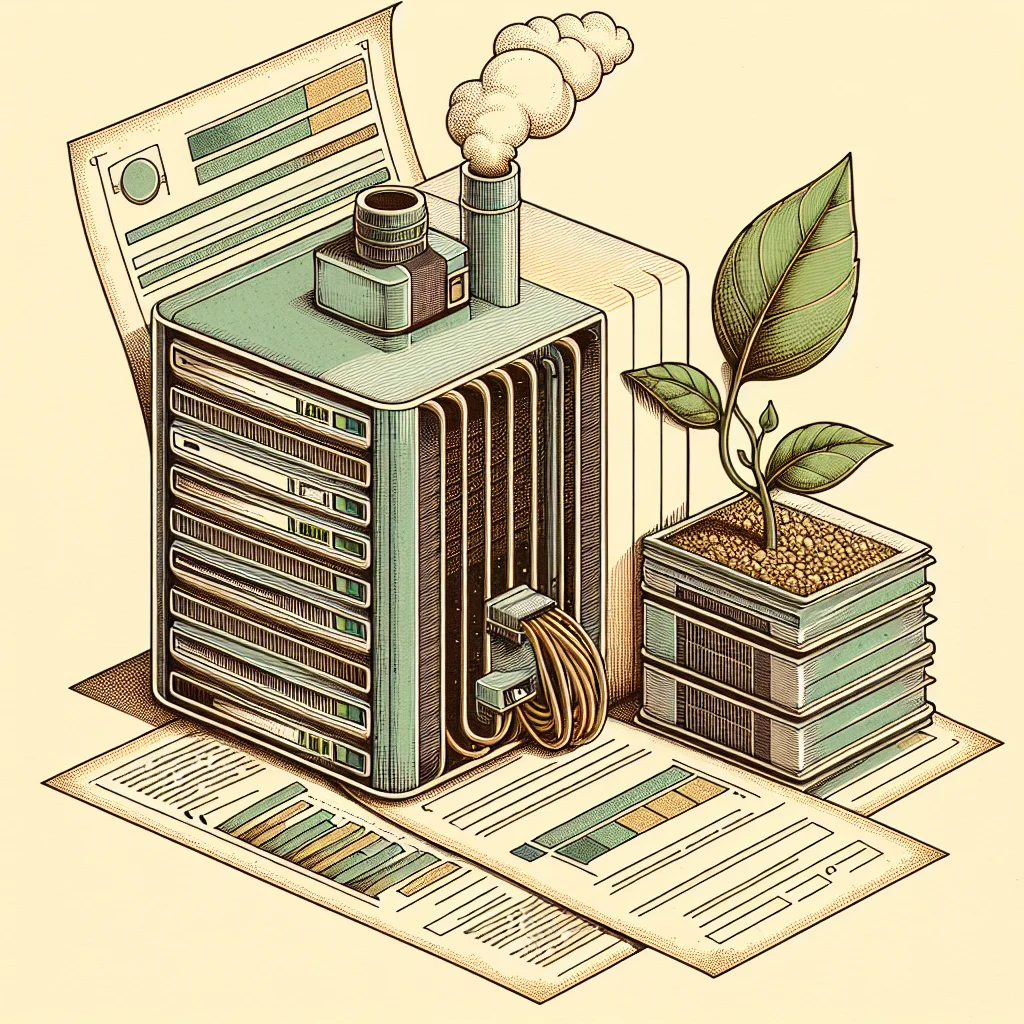
The internet uses more electricity than most countries. That is not a metaphor. That is not an exaggeration for comedic effect. Data centers, network infrastructure, and the billions of devices accessing the web consume an estimated 4% of global electricity. Every page load, every image download, every JavaScript bundle execution uses real energy from real power plants. Your website is basically a tiny power plant that runs on other people's electricity bills.
And odds are, your site is heavier than it needs to be. Not to put too fine a point on it, but your homepage probably weighs more than the complete works of Shakespeare. In what universe does a page with three paragraphs and a stock photo need to be 5 megabytes? This universe, apparently.
The Average Web Page Has Been Stress-Eating
In 2010, the average web page was about 500 kilobytes. Today, the average is over 2 megabytes. Some pages weigh 5 or 10 megabytes. That is a ten-fold increase in a decade and a half. The web has put on weight faster than someone who discovered DoorDash during a pandemic. And most of that weight is not content. It is overhead. Unoptimized images that could lose 80% of their file size without anyone noticing. Unused CSS that is just along for the ride. Tracking scripts that outnumber your actual features. Font files for typefaces you could replace with system fonts. JavaScript frameworks that load two megabytes of code to render what is essentially a blog post with a contact form.
Every one of those bytes has to travel through data centers, across fiber optic cables, through cell towers, and into your visitor's device. Every step uses energy. Your unoptimized hero image is basically taking a cross-country road trip in a Hummer every time someone visits your homepage.
Performance and Sustainability Are the Same Thing (Plot Twist!)
Here is the beautiful truth about web sustainability: every optimization that reduces your carbon footprint also makes your site faster. Smaller images mean faster load times AND less data transferred. Efficient JavaScript means quicker rendering AND less CPU usage. Fewer unnecessary requests mean lower latency AND less server energy. It is the rare situation where doing the right thing and doing the selfish thing are the exact same thing. Everybody wins.
Sustainability is not a separate concern from performance. It IS performance, measured in watts instead of milliseconds. Saving the planet and making your website not terrible are the same task. How convenient.
The Low-Hanging Fruit (So Low You Are Basically Tripping Over It)
The biggest wins are almost always in images and JavaScript:
- Convert images to modern formats: WebP and AVIF are dramatically smaller than JPEG and PNG at the same visual quality. A single image conversion can save 60-80% of its file size. It is like going from a hardcover encyclopedia to a paperback novel with the same information.
- Lazy-load below-the-fold images: If an image is not visible when the page first loads, there is no reason to download it immediately. The loading="lazy" attribute handles this with zero JavaScript. It is one HTML attribute. It is free. It is right there. Please use it.
- Audit your JavaScript bundles: Many sites load megabytes of JavaScript that is never executed on the current page. You are shipping the entire toolbox when all you needed was a screwdriver. Tree shaking, code splitting, and removing unused dependencies can dramatically reduce bundle sizes.
- Enable compression: Gzip or Brotli compression can reduce text-based resources (HTML, CSS, JavaScript) by 60-80%. Most servers support it, but it is not always enabled by default. Turning it on is like discovering your suitcase has a compression zipper you never used.
- Use system fonts: Loading a custom font file adds 100-400KB per weight. System fonts (the ones already on the user's device) add zero bytes. Zero. Your visitors probably will not notice the difference, but the planet will.
A Lighter Web Benefits Literally Everyone
A lighter website is faster, cheaper to host, more accessible on slow connections, better for mobile users with data caps, and easier on the planet. There is no downside. None. The heaviest sites are not the best sites. They are the least optimized. They are the digital equivalent of driving a monster truck to pick up a carton of milk.
Run a performance audit. Look at your total page weight, your largest resources, and your number of requests. Chances are good that you can cut your page weight in half without any visible difference to your users. They will just notice that everything loads faster. And somewhere, a tiny data center will breathe a sigh of relief.
The greenest website is the one that sends only what it needs to. Everything else is just digital pollution with a loading bar.
Disclaimer: This article is for informational purposes only and does not constitute legal, professional, or compliance advice. SCOUTb2 is an automated scanning tool that helps identify common issues but does not guarantee full compliance with any standard or regulation.
Stop finding issues manually
SCOUTb2 scans your entire site for accessibility, performance, and SEO problems automatically.